
Neck Lines Treatment
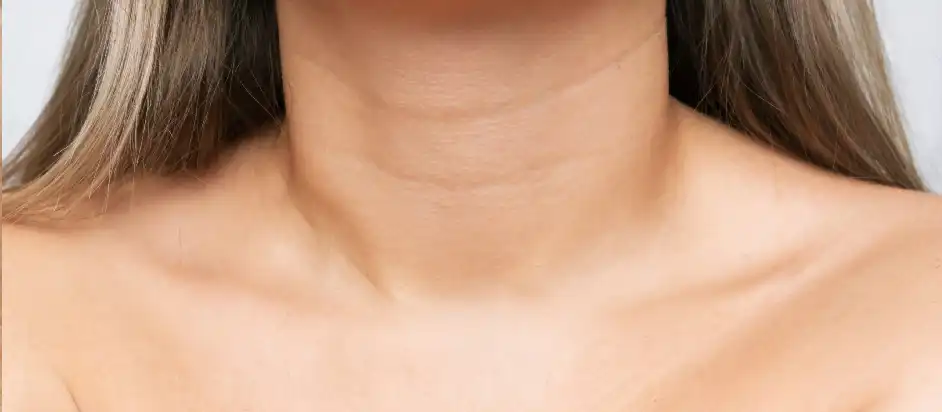
As time passes, the neck’s delicate skin frequently becomes the first to reflect aging. Neck lines—horizontal wrinkles that form across the neck—can make one appear older than they feel. With today’s lifestyle factors like excessive screen time (“tech neck”), sun exposure, and natural skin laxity, neck lines are more common and noticeable, even in younger individuals.
If you’re troubled by neck lines and looking for an effective and safe solution, Dr. Suruchi Puri, a renowned Skin Specialist in Delhi, offers world-class treatments tailored to rejuvenate your neck and restore smooth, youthful skin.
Book an Appointment
Why Do Neck Lines Form?
The skin on the neck is thinner than facial skin and has fewer oil glands, making it more susceptible to signs of aging. Common causes of neck lines include:
- Natural Aging: Reduction in collagen and elastin leads to sagging and wrinkles.
- Tech Neck: Constant bending while using phones or laptops strains the neck skin.
- Sun Damage: UV exposure breaks down skin fibers and accelerates aging.
- Lifestyle Factors: Dehydration, lack of skincare, and poor posture.
Fortunately, modern dermatology offers a variety of advanced treatments to reduce these lines and restore skin firmness.
Comprehensive Neck Lines Treatment Options
At her clinic in Janakpuri, Dr. Suruchi Puri, the Best Dermatologist in West Delhi, offers a range of evidence-based treatments for neck lines. We design our treatment plan according to your skin type, age, and severity of the wrinkles.
Botox Injections
Botox relaxes the platysma muscle in the neck, smoothing out horizontal lines and preventing new ones from forming. Results typically last 4–6 months.
Ideal for: Early to moderate neck lines and muscle-related bands.
Dermal Fillers
Hyaluronic acid-based fillers are injected directly into deeper neck lines to plump and smooth them out.
Ideal for: Deep-set horizontal wrinkles and volume loss.
Microneedling with Radiofrequency (RF)
This dual-treatment stimulates collagen production using tiny needles and heat. Over time, it tightens the skin and improves texture as well.
Ideal for: Sagging skin, crepey texture, and fine lines.
Laser Skin Rejuvenation
Fractional CO2 or non-ablative lasers target damaged skin, reduce pigmentation, and trigger collagen renewal.
Ideal for: Mild to moderate neck lines with pigmentation or sun damage.
Chemical Peels
Peels with glycolic or lactic acid gently exfoliate the skin, improving tone and texture while stimulating new skin growth.
Ideal for: Surface-level neck lines and dull skin.
Skin Boosters & PRP Therapy
Skin boosters (like light hyaluronic acid injections) and Platelet-Rich Plasma (PRP) nourish the neck skin deeply, enhancing hydration, firmness, and glow.
Ideal for: Dehydrated, dry, and aging neck skin
Why Choose Dr. Suruchi Puri for Neck Line Treatment?
Whether you’re facing pronounced neck lines or the first signs of aging, Dr. Suruchi Puri ensures that you receive world-class treatment from one of the Best Skin Specialist in Janakpuri.
Trusted Name in Dermatology
As a top-rated Skin Doctor in Delhi, Dr. Suruchi Puri brings unmatched clinical expertise and precision to every treatment.
Patient-Centered Approach
Every procedure is designed according to your different skin needs, ensuring optimal and natural-looking results.
Advanced Technology
Dr. Suruchi Puri’s clinic in Janakpuri uses FDA-approved machines and safe, clinically proven techniques.
Affordable and Transparent
Quality care with no hidden charges. Every step is explained clearly.
Home Care & Maintenance
Dr. Puri emphasizes that in-clinic treatments must be supported by a strong at-home regimen. She provides a customized plan that includes:
- Broad-spectrum sunscreen
- Antioxidant-rich moisturizers
- Retinoids (if suitable)
- Hydration-focused products
Regular follow-ups and lifestyle changes like improved posture and hydration also play a major role in maintaining results.
Book Your Consultation Today
If you’re tired of hiding your neck with scarves or high collars, it’s time to take control. Trust Dr. Suruchi Puri, the Best Dermatologist in Delhi, to guide you toward radiant, youthful skin with safe and effective neck lines treatment.
FAQs
Ans. Dihydrotestosterone (DHT) is produced from the male hormone testosterone by the enzyme 5-alpha reductase. DHT is the androgen thought to be most responsible for the type of hair loss also known as male pattern baldness. DHT has a very high affinity for the androgen receptor and is estimated to be five to ten times more potent than testosterone. Other androgens that may be significant in pattern loss include androstenedione, androstanedione and DHEA (especially in women). All of these fall into hormonal pathways that can potentially result in elevation of DHT downstream via various enzymes. It is possible that certain DHT metabolites may play a role in male pattern hair loss as well.
Ans. There is no simple answer to this. No one treatment offers spectacular hair growth for all people who use it. However, there are a few treatments that yield decent results for a majority of people. (Decent is defined here as cessation of further hair thinning and perhaps some regrowth, ranging from a little to moderate.) Some people do respond unusually well–but then some don’t respond at all. Most fall somewhere in between. Since there are multiple factors in male pattern hair loss, it is wisest to approach the problem from several angles to maximize results, as some treatments are complementary and address different underlying causes. A common fundamental approach is to use an “antiandrogen” of some kind, whether systemic (such as finasteride) or topical (such as azelaic acid), and a growth stimulant such as minoxidil (Rogaine). To this basic program many add a topical SOD. Other options include therapeutic shampoos, such as the antimicrobial and caffeine-based milder shampoos without paraben and sulfate. Still other approaches that may help include dietary and nutritional considerations and even lifestyle modifications. There are many adherents to such a “kitchen sink” approach. You can also start with a single hair loss treatment, though due to the long lag time before you can actually verify efficacy, this can be very hit and miss and may bring less than optimal results by only addressing one aspect of a larger problem.
Ans. Sometimes stress can play a role in diffuse loss. Stress-induced loss ordinarily regrows within a year of eliminating the cause.
Ans. At least 2-3 months, though usually significantly longer. Many do not notice any apparent improvements until well after a year. Best results are often seen after the two-year mark. This is because hair follicles undergo a relatively long dormancy period in between hair growth cycles (usually about 3 months). In addition, hair only grows about 1/2 inch per month in non-thinning areas and usually considerably slower in thinning areas. Since it generally takes several cycles of growth/fallout/regrowth, with the hair getting thicker and longer each time, it can take a great deal of time to see noticeable improvement. Note that best regrowth results are seen with hair that was lost within the last five years and in areas of the scalp in which there is still some fine hair.
No, it does not. Balding occurs with permanent destruction of the hair follicle. Hair fall in those with Male Pattern Baldness may experience this, that too few selected cases.
100 hairs per day is considered normal hair fall, provided there is good hair growth. You need to worry and take treatment only if you exceed this, have poor hair growth or reduced quantum of hair.